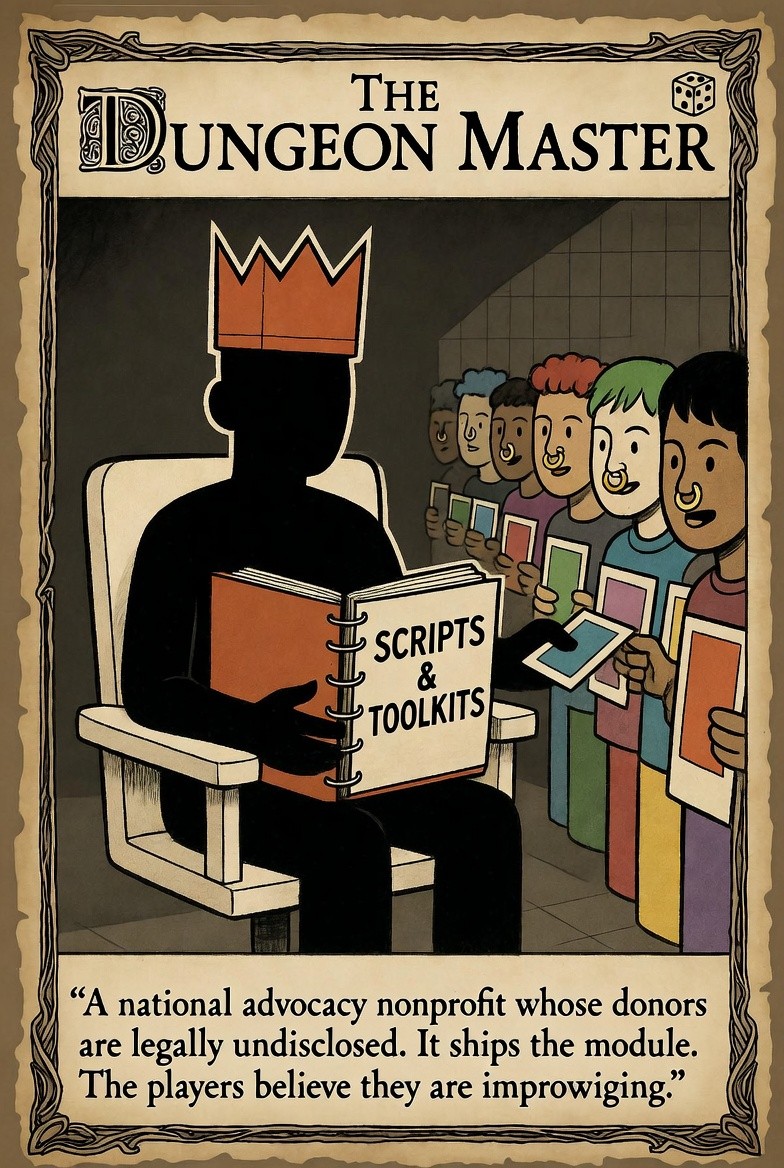
Here is the tell, and once you see it you cannot stop seeing it: the signs rhyme.
Not literally. But go and look at a hundred photographs from a hundred towns on the same Saturday and count the distinct ideas. There are about nine. The same nine, in the same fonts, in the same three colors, on the same afternoon, in places that have nothing else in common. That is not what spontaneous looks like. Spontaneous is incoherent. Spontaneous has bad slogans and inconsistent turnout and no unified visual language.
What you are looking at is a campaign module. Somebody wrote it, laid it out, and shipped it down the chain, and the people holding the signs are running it faithfully while sincerely believing they thought of it.
Meet your Dungeon Master
A national advocacy nonprofit. It has a communications department, a style guide, a livestream schedule, and a legal structure under which its donors are not disclosed to you. Not hidden illegally — hidden lawfully, which is worse, because there is no scandal to uncover and therefore nothing anyone can be made to answer for.
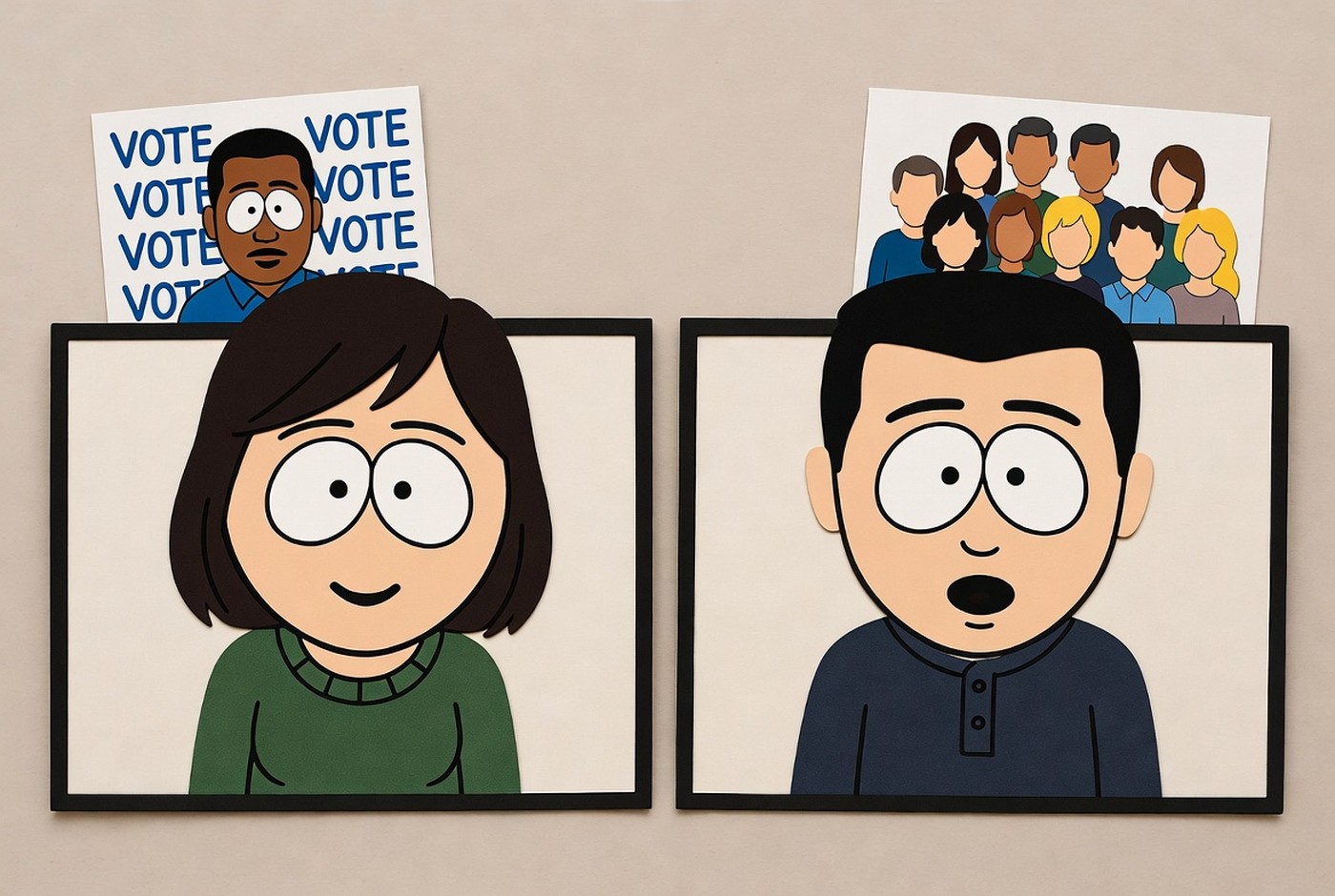
This is the part worth sitting with. The local chapter is not lying to you about being grassroots. The local chapter genuinely does not know. The money and the messaging enter at the top, and by the time they reach the overpass they have been laundered through so many layers of sincere volunteers that everyone in the chain can honestly say they are just a neighbor who cares.
The further down the chart you go, the less anyone knows who is paying, or why. That is not a bug in the design. That is the design.
The honest version
Real grassroots is ugly and local and slow. It is nine people arguing about a culvert. It has no style guide because it has no budget for one. Its signs are bad. Its turnout is unpredictable. And it occasionally wins something, which is how you can tell it was real.
A franchise, by contrast, is beautiful, synchronized, and structurally incapable of winning anything local, because winning locally was never in the module.